Clock In: The Art of Showing Up to a Bar at Exactly the Right Moment
You've been to that bar before. You know the one — the place where you had one of the best nights of your life. Then you went back two weeks later, walked in at a slightly different time, and wondered if you'd somehow stumbled into the wrong address. Same neon signs. Same barstools. Completely different planet.
Here's the thing nobody tells you: the venue didn't change. Your timing did.
Every spot in this city runs on its own internal clock, a rhythm that shifts the entire atmosphere hour by hour. The trick to consistently having a great night out isn't just knowing where to go — it's knowing when. And once you start thinking about bars and clubs the way a conductor thinks about tempo, your whole relationship with going out gets a serious upgrade.
The 5 PM Version Is a Different Animal
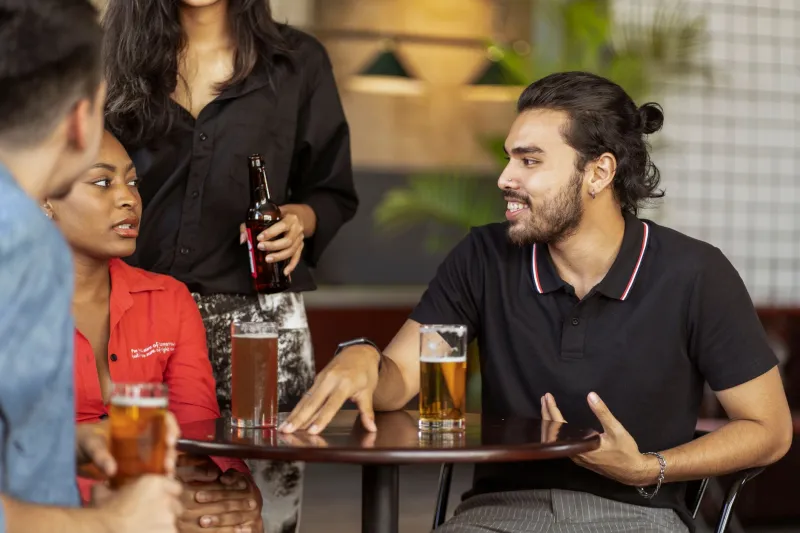
Let's start at the beginning. Happy hour — real happy hour, not the Instagram-caption version — is one of the most underrated windows in the entire going-out timeline. Walk into most bars between 5 and 7 PM on a weekday and you're stepping into a completely different social contract.
The lighting is softer because the sun is still doing some of the work. The music is lower, which means actual conversation is possible without leaning in like you're sharing classified intel. The bartenders have bandwidth. They'll actually talk to you, recommend something off-menu, tell you what's worth ordering before the kitchen gets slammed.
Happy hour rewards the early crowd with something the late-night crowd never gets: breathing room. If you're on a first date, meeting a new colleague, or just trying to decompress after work without getting swallowed by a crowd, this is your window. Don't sleep on it.
The 8 to 10 PM Transition: Where the Night Gets Its Shape
This is the pivot point. The after-work crowd is either on their third drink or heading home, and the evening crowd is filtering in with entirely different energy and intentions. The music ticks up a few notches. The bar fills from the edges inward. The vibe shifts from "unwinding" to "warming up."
If you're going out with a group, this is arguably the best time to arrive. You get seats — or at least a fighting chance at them. The bartenders are still in a groove before things get chaotic. And the atmosphere has enough momentum to feel like a real night out without the sensory overload that comes later.
This window is also when you can actually read a venue. Watch how the crowd is building. Is the energy moving toward the dance floor or clustering around the bar? Is the DJ testing the room or already committed to a direction? You're essentially watching the night take its shape in real time, and that's useful information.
10 PM to Midnight: Peak Noise, Peak Crowd, Peak Everything
This is the version of the bar that most people think of when they think of going out. Full capacity. Music loud enough to feel it in your chest. The dance floor has its own gravitational pull. Rounds are being ordered, not sipped.
If this is what you came for, great — you're right on time. But it's worth knowing that this window comes with trade-offs. Wait times at the bar stretch. Personal space becomes a negotiation. Conversations happen in shouted fragments. The venue is operating at full intensity, which is exactly what some nights call for and exactly what others don't.
The key is matching your expectations to the hour. Don't show up at 11 PM hoping for the quiet intimacy of happy hour. And don't show up at 6 PM and wonder why nobody's dancing. The venue is doing exactly what it's supposed to do — you just have to be on the same page.
The Late-Night Shift: After Midnight Has Its Own Rules
Something interesting happens after midnight. The crowd thins, but the people who stay get more interesting. The performative energy of peak hours fades. What's left is a looser, more honest version of the night.
Some bars fully transform in this window. A spot that was a packed, shouty scene at 11 PM can feel almost intimate by 1 AM — fewer people, but the ones who are there are genuinely committed to being there. Bartenders start having real conversations again. Music choices get weirder and better. The whole thing slows down in a way that somehow feels more alive.
This is also when you start to see the true personality of a venue. The late-night crowd is self-selected. They're not there because it seemed like the thing to do on a Friday — they're there because they actually wanted to be there. That changes the texture of everything.
How to Actually Use This Information
Okay, so how do you put all of this into practice? A few practical moves:
Match the hour to the intention. If the goal is a real conversation — with a date, a friend you haven't seen in months, someone you just met — aim for the earlier window. If the goal is to lose yourself in a crowd and dance until your feet hurt, plan for peak hours. Don't fight the timeline.
Do a reconnaissance lap. If you're unfamiliar with a spot, go once during happy hour before you commit to a big night there. You'll learn more about a venue in 45 minutes at 6 PM than you will in three hours at midnight.
Know your venue's specialty. Some bars are built for the early crowd — great food, killer cocktail program, low-key atmosphere that gets wrecked by volume later. Others are specifically designed to peak late, with a sound system and layout that only make sense at full capacity. Ask around, read the room, and adjust accordingly.
Lean into the transition. The 8 to 10 PM window is genuinely undervalued. You get the best of both worlds — enough energy to feel like a real night, enough room to actually enjoy it.
The Venue Hasn't Changed. Have You?
There's a reason your favorite spot felt electric on one visit and flat on the next. It wasn't luck, and it probably wasn't the crowd. It was the clock. Every great bar, club, or lounge in this city runs on its own internal rhythm, and once you start paying attention to that rhythm, you stop leaving things to chance.
The city is always open. The question is just which version of it you're walking into — and whether you showed up at the right time to meet it.