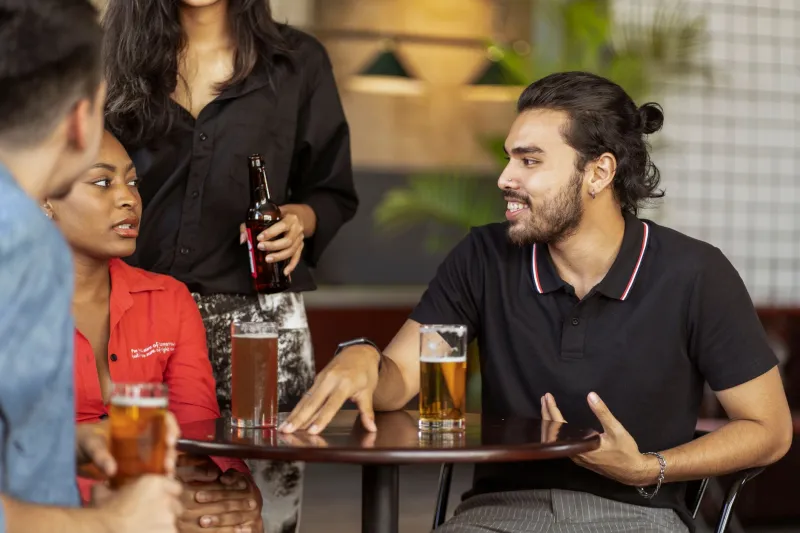
Why Some Bars Survive the Group Chat and Others Don't
You know the drill. Someone throws out a suggestion in the group chat. Immediately, three people love it, two people have never heard of it, one person "doesn't really do that area," and someone else just sends a shrug emoji. Twenty minutes of back-and-forth later, you're either at the original place or eating sad tacos alone at home.
Here's the thing though — it's not always about the people. Sometimes it's about the venue itself. Some spots are genuinely built to absorb the chaos of a mixed group. Others? They practically manufacture drama. And once you start noticing the difference, you can't unsee it.
The Layout Does More Work Than You Think
The single biggest factor in whether a night survives group dynamics is how a space is physically arranged. Sounds boring. It's actually everything.
Venues with flexible seating — moveable chairs, a mix of high-tops and low tables, booths that can be pushed together — give groups room to breathe and reconfigure. People can break into smaller conversations without feeling like they've abandoned the group. Someone who's tired can drift to the edge. The social butterfly can work the middle. Nobody feels trapped.
Contrast that with long, narrow bars where everyone is basically standing in a single-file line, or huge open rooms with fixed seating that forces twelve people into a table meant for eight. Both of those setups create friction almost immediately. You're either shouting over people or elbowing someone every time you reach for your drink.
The best group-friendly venues in any city tend to have what designers call "zoned" interiors — distinct pockets of space that feel connected but still separate. Think of a place with a bar area, a lounge section, maybe a back patio. That kind of layout lets a group expand and contract naturally over the course of a night, which is exactly how good nights actually work.
Noise Levels: The Silent Relationship Killer
Nothing fractures a group faster than a venue where you literally cannot hear the person next to you. When communication breaks down, so does cohesion. People start drifting. Side conversations become the only option. Someone feels left out. Someone else gets annoyed. The whole social fabric starts unraveling, and nobody can even explain why they're suddenly in a bad mood.
The bars and restaurants that consistently keep groups intact tend to run their music at a level that adds energy without killing conversation. It sounds like a small thing. It is not a small thing. It's the difference between a group that stays for three rounds and a group that starts looking at their phones after forty-five minutes.
Acoustic ceiling panels, booth dividers, and even just carpet instead of concrete floors can dramatically change how sound moves through a room. The venues that invest in this stuff aren't just being fancy — they're actively creating conditions where people want to stay.
Staff Energy Sets the Tone for Everyone
A great bartender or server can do something that no amount of good interior design can fully replace: they can redirect tension. When a group is indecisive, stressed, or starting to splinter, a confident staff member who takes charge — suggests a round, makes a recommendation, cracks a well-timed joke — can reset the whole vibe in about thirty seconds.
The venues that consistently earn loyal group business tend to hire people who understand this instinctively. They're not just taking orders. They're reading the table. They know when to be attentive and when to back off. They can tell when a group is celebrating versus when they're on thin ice, and they adjust accordingly.
This is especially true in spots with communal menus or shared plates, where decision fatigue is already high. A server who comes in with a clear, confident "here's what you should order" energy is basically a group therapist at that point. People relax. Decisions get made. The night moves forward.
The Menu Has a Personality, Too
Menus that are too long, too complicated, or too niche create their own kind of group stress. When there's one person who doesn't eat meat, one person who's watching their budget, one person who only drinks craft beer, and one person who "isn't really hungry, just here to hang" — you need a menu that can quietly accommodate all of that without making anyone feel like a burden.
The venues that do this well tend to offer genuine range without being overwhelming. A solid mix of price points. A few shareable options. At least something for the person who just wants a beer and some fries. When everyone can find their thing without a fifteen-minute negotiation, the group energy stays positive.
Spots that are too precious about their concept — the place with twelve items on the menu and all of them are $28 — can be amazing for a date or a small dinner. But they often buckle under the weight of a larger, more varied group. Not because the food is bad. Because the format doesn't bend.
The Vibe Has to Be Legible
This one's subtle but real. Venues that survive the group chat tend to have a clear, readable identity. You know what you're walking into. The energy is consistent from the door to the bar to the back corner. That predictability matters more than people realize, because it gives everyone a shared reference point.
When a spot is trying to be too many things — half dive bar, half cocktail lounge, with a DJ who might or might not show up — the group energy fractures because nobody agrees on what the night is supposed to feel like. Someone thinks it's a chill hang. Someone else thinks it's a party. The misalignment shows up in attitude, in energy, in who wants to leave early.
The best group venues own their identity. They're loud and proud about what they are. That clarity is actually a gift to whoever organized the night, because it sets expectations before anyone even walks through the door.
What This Actually Means for Your Next Night Out
Next time you're staring down a group chat that's going sideways, try thinking about the venue like a variable rather than just a backdrop. Look for places with flexible layouts, manageable noise levels, and menus that have some range. Check if the spot has a clear identity that everyone in the group can get behind.
Because the truth is, the right venue doesn't just host a night out — it actually shapes one. The best spots out there are doing a lot of quiet, invisible work to keep your crew together. They've thought about the acoustics, the sightlines, the pacing, the staff. And when all of that clicks, it feels effortless.
Which is exactly what a good night out is supposed to feel like.