After Last Call: The Secret City That Only Exists at 3 AM
There's a version of your city you've probably never met.
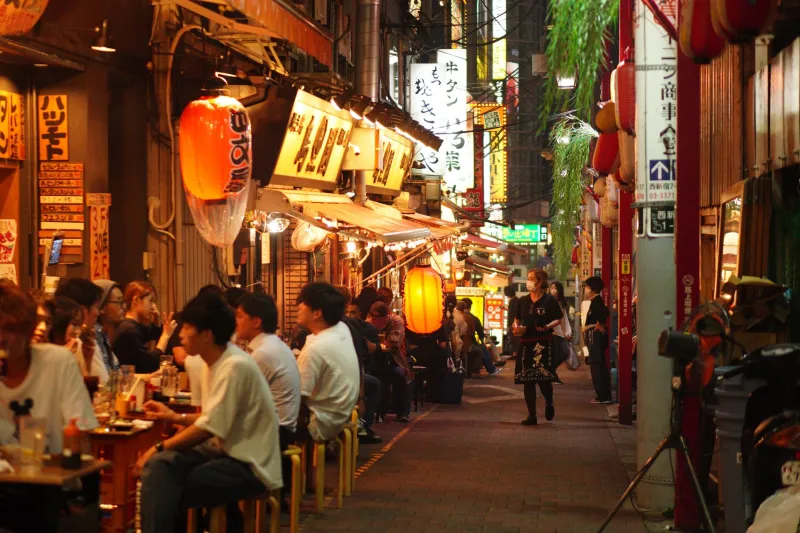
It doesn't have a marketing campaign. It's not on anyone's "best of" list. It doesn't care about brunch or rooftop bars or whatever neighborhood is having its moment right now. This version of the city operates somewhere between midnight and dawn, and it runs on coffee, necessity, fluorescent lighting, and a kind of weary camaraderie that daylight hours almost never produce.
We went looking for it. Here's what we found.
The Streets Don't Empty — They Transform
Step outside at 3 AM on a Tuesday and your first instinct is probably that the city is off. The sidewalks are thin with people. The traffic signals cycle through their colors for nobody in particular. But give it ten minutes. Let your eyes adjust — not just to the darkness, but to a different rhythm entirely.
The delivery trucks are already moving. Produce guys are stacking crates outside restaurants that won't open for six more hours. A woman in scrubs is power-walking to a bus stop with the focused energy of someone who has done this exact walk a thousand times. A security guard makes his rounds with the slow, deliberate pace of a man who has made peace with the night.
The city isn't empty. It's just running on a different crew.
"People think nothing happens after 2," says Marcus, a bread baker who starts his shift at 11 PM at a wholesale bakery that supplies restaurants across the metro area. "But this is when the real work gets done. Everything you eat tomorrow morning? Someone made it last night."
That's the first truth the 3 AM city hands you: the infrastructure of your daily life is built by people you will almost certainly never see.
The All-Night Diner Is Its Own Civilization
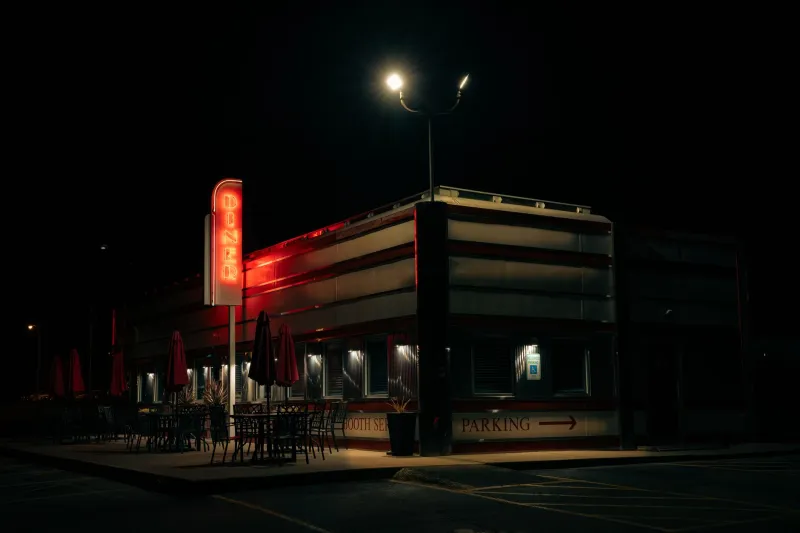
If you want to understand a city's overnight population, find the 24-hour diner that's been there since before the neighborhood changed. Not the trendy late-night spot that closes at 4. The actual diner with the laminated menus and the coffee that tastes like it's been brewing since 1987.
Sit at the counter. Order something simple. Watch.
The booths tell a story. There's a table of hospital workers on break, still in their scrubs, laughing at something that happened on the floor. There's a guy nursing a coffee who clearly has nowhere to be and nowhere else to go. A young couple shares a stack of pancakes with the comfortable silence of people who've been together long enough that they don't need to fill every moment. Two cooks from the restaurant down the block are decompressing after a brutal Saturday service, still wearing their kitchen shoes.
Jamila, a night-shift waitress who's worked the same diner for eleven years, has a theory about why she prefers overnights. "Daytime customers want things fast. They're in a hurry, they've got somewhere to be. My people?" She gestures at the room. "They're here because they want to be. Nobody comes in at 3 AM by accident."
She's right. There's an intentionality to the overnight crowd that's genuinely striking. Everyone in that room made a specific choice to be there. That shared fact — that loose, unspoken membership in the same strange club — creates a social texture you don't get anywhere else.
The Insomniacs, the Dedicated, and the Shift Workers
Spend enough nights out here and you start to recognize the different tribes.
First, there are the shift workers — the backbone of the whole operation. Nurses, bakers, security guards, sanitation crews, overnight stockers at the grocery store, the people who clean office buildings. They're not here because they want to be; they're here because the city needs someone to be. They move with purpose and efficiency, and they have a certain no-nonsense relationship with the night that the other groups lack.
Then there are the insomniacs — a more scattered, solitary bunch. You find them in 24-hour gyms at 4 AM, in the corner of a diner with a book, walking neighborhoods with no particular destination. They didn't choose this schedule. Their brain did, and they've made a kind of peace with it. Many of them describe the overnight city as their only real alone time — a quiet that's impossible to find when the rest of the world is awake.
"I used to fight it," says Derek, a freelance designer who hasn't slept before 3 AM in years. "Now I just build my whole life around it. The city at 2 AM is honestly the most peaceful I ever feel. No pressure. No performance. Just me and whoever else is up."
Finally, there are the dedicated partiers — the ones who see last call as a suggestion rather than a conclusion. They know which afterhours spots are worth the effort, which 24-hour spots have a real scene, and which basement parties are still going strong when the bars have long since kicked everyone out. They operate on insider knowledge and group chats, and they represent a genuine subculture of people for whom the night is the point, not the means to something else.
What the Overnight City Actually Tells You
Here's the thing about spending time in the city's quietest hours: it strips away the performance.
The daytime city — and especially the nightlife city — is, to a significant degree, a city performing itself. The bars are lit for Instagram. The restaurants are designed for a certain kind of experience. Even the neighborhoods have cultivated identities that they project outward. All of that is real, but it's also curated.
At 3 AM, the curation collapses. What's left is the actual skeleton of the place — who really lives here, who really works here, what the city actually needs to function, and what people do when no one is watching or judging or documenting.
The overnight city is where you find out if a place has a soul or just a brand.
Some cities feel genuinely different at 3 AM — warmer, more human, more honest. Others feel hollow without the crowd. That gap, between who a city pretends to be and who it is when the lights go down, is one of the most revealing things you can learn about a place.
You Don't Have to Stay Up All Night to Get It
You don't need to become a night owl to absorb some of this. Even one deliberate late night — pushing past your usual stopping point, wandering somewhere unfamiliar, sitting in a diner at 2:30 AM instead of going home — can crack open a completely different relationship with your city.
Talk to the people who are actually there. Ask the waitress how long she's worked nights. Strike up a conversation with the guy on the barstool who's clearly been there longer than you have. You'll hear things about the city that no guidebook, no algorithm, and no "best of" list will ever surface.
The 3 AM city isn't for everyone. But it's for more people than you'd think. And if you've ever felt like you've seen everything your city has to offer, like the place has gone a little flat on you — this is the version that might change your mind.
You just have to stay up long enough to meet it.