Last Call for Real: The Warning Signs Your Favorite Spot Is Already Gone — You Just Don't Know It Yet
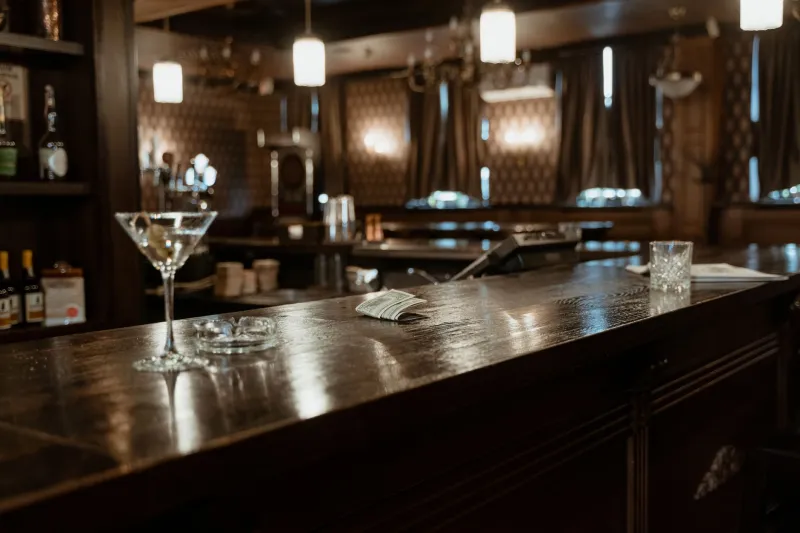
Every city has a graveyard of places that used to mean something. Not the ones that shut down overnight — those are obvious. The harder losses are the slow ones. The bar that's technically still open but feels like a ghost of itself. The restaurant that still has the same name on the door but serves completely different food to a completely different crowd. The venue that didn't die — it just became something else while you weren't paying attention.
If you've been going out long enough, you've experienced this. You walk into a place you love and something feels off. You can't name it. The lights are the same. The sign is the same. But the room is different in some way you can't quite articulate.
That feeling is data. And if you know how to read it, you can see what's coming before it arrives.
Staff Turnover Is the First Domino
Nothing signals a venue's trajectory faster than who's working there. Bartenders and servers are the institutional memory of a place. They know the regulars, they know the vibe, they know what the owner is stressed about. When the people who built a room's culture start leaving, they take that culture with them.
One departure means nothing. Two in a short window is a pattern. Three is a signal.
Pay attention to who's still there versus who's new. A fresh staff that doesn't know the regulars' names, doesn't know the stories behind the specials, and seems to be figuring out the rhythm of the room from scratch — that's a venue in transition. It might come out fine on the other side. But it won't come out the same.
Also worth noting: when management changes and the existing staff stays, that's a different story. Those employees are the continuity. When they leave because management changed, that's the version that should worry you.
The Menu Starts Talking
Menus are a venue's personality made tangible. When they change dramatically — and especially when they change quietly, without announcement — something is shifting in the business.
The most telling version of this is when signature items disappear. The thing everyone ordered. The dish that made it into every review. Gone, with no explanation. Sometimes it's a supply issue. Sometimes it's cost-cutting. Sometimes the person who made it left. Any of these reasons can be innocent. But all of them are worth noticing.
Also watch for a menu that suddenly becomes more generic. When a bar with a distinctive cocktail program replaces half its list with vodka sodas and Jack and Cokes, it's not doing that for fun. It's doing that because someone ran the numbers and decided the distinctive stuff wasn't paying off. That calculation usually means the venue is pivoting toward a different customer — one who doesn't care about what made the place special.
Upward price creep without explanation is its own signal. Not a bad sign necessarily, but a sign of repositioning.
The Scheduling Shifts
Look at what a venue is booking, and you'll see where it thinks its future is.
When a bar that used to host local jazz nights quietly stops listing them, when a club that built its reputation on a specific DJ night starts going dark on Thursdays, when a live music venue starts filling the calendar with private events and corporate buyouts — these are not random decisions. They reflect what the ownership believes is sustainable.
Private events are a particularly telling indicator. They're lucrative, low-overhead, and they don't require building a loyal audience. When a venue starts leaning on them heavily, it often means the regular business model is under pressure. That's not automatically fatal, but it changes the relationship the place has with its community.
Also watch for sudden additions to the calendar that feel out of character. A dance club hosting a trivia night. A cocktail bar adding a happy hour DJ. These experiments can work, but they're also signs of a venue trying to find a new audience — which implies it's losing its old one.
Demographic Drift Happens Quietly
Who's in the room matters as much as what's in the room. Every venue attracts a crowd over time, and that crowd is part of what makes the place feel the way it does. When the crowd starts shifting — younger, older, different vibe entirely — the place is shifting with it, whether the ownership intended that or not.
This isn't a judgment about which demographics are better. It's an observation that the crowd a venue built its identity around is its most fragile and most essential asset. When that crowd stops showing up, the venue has to decide what comes next. Sometimes the answer is a reinvention that works. Often, it's a slow drift toward something that serves no one particularly well.
Pay attention to who's at the bar on a Tuesday versus a Saturday. Pay attention to whether the regulars you used to see are still regulars. Pay attention to whether the room feels curated or random.
The Social Media Goes Quiet — Or Gets Weird
A venue's Instagram is a window into its operational health. Regular posting means someone cares about the brand. Consistent content means there's a strategy. When the posting drops off — or worse, becomes erratic and low-effort — it usually means the team is either understaffed, distracted, or operating in crisis mode.
Watch for the shift from original content to reposts and generic graphics. Watch for the sudden disappearance of staff-facing content (behind-the-scenes, staff highlights, event previews). Watch for the tone change — from enthusiastic to rote.
Also: when a venue stops responding to comments and messages, it's often because whoever managed that relationship is gone.
What to Do With What You Know
Once you can read these signals, you have a choice. You can document the place while it's still itself — go more often, bring the people who love it too, take the photos, have the conversations with the staff while they're still there. Treat it like a closing show even if it hasn't announced one yet.
Or you can watch the transformation with curiosity instead of grief. Some venues reinvent themselves into something genuinely good. The signs that predict change don't always predict decline.
But they do predict change. And knowing it's coming means you don't have to be the person who shows up one day and realizes, too late, that the place you loved has already been gone for months.