Meet Your Neighbors: The 5-Block Revolution Quietly Changing How Americans Live
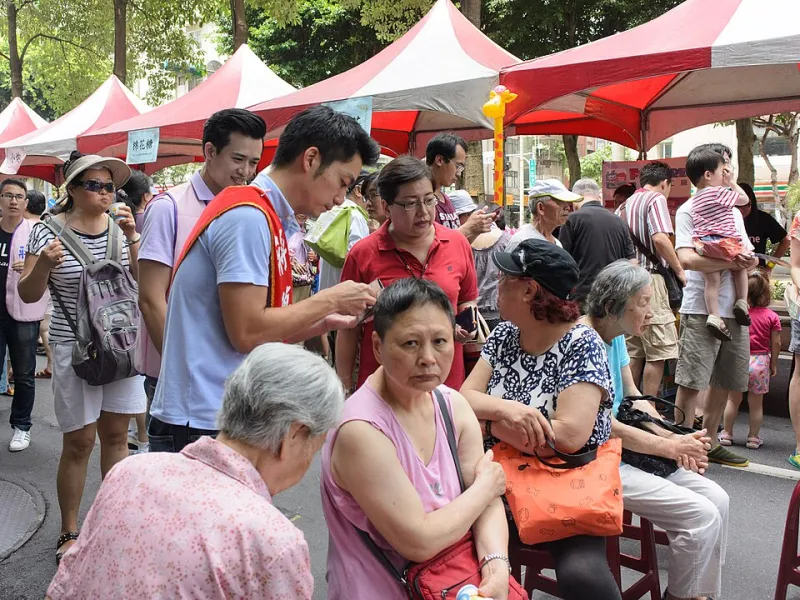
Photo: 玄史生, CC0, via Wikimedia Commons
You probably know your Wi-Fi password better than you know the person next door. That's not an insult — it's just the reality of modern city living. But something is shifting. In neighborhoods from Portland to Pittsburgh, from Austin to Atlanta, a quiet revolution is underway. People are shrinking their world on purpose, trading the overwhelming noise of the broader city for something far more manageable: the five-block community.
Call it micro-neighborhood culture. Call it hyper-local living. Call it whatever you want — the point is, it's working.
What Even Is a Micro-Neighborhood?
The concept is pretty simple. Instead of identifying with an entire city or even a broad neighborhood like "The East Side" or "Midtown," residents are zeroing in on a walkable cluster of streets — typically five blocks in any direction — and treating that small zone as their primary community anchor.
Urban planner Dana Reyes, who consults for mid-sized cities across the Midwest, puts it this way: "We've been designing cities for cars for decades. What micro-neighborhoods represent is people physically reclaiming the pedestrian scale. They're saying, 'This corner, this block, this coffee shop — this is mine.'"
It sounds almost quaint. But the data and the on-the-ground energy suggest this isn't nostalgia — it's adaptation.
The App Effect (And Its Limits)
Platforms like Nextdoor gave the hyper-local movement its digital infrastructure, but residents are increasingly finding that apps alone don't cut it. Sociologist Marcus Huang, who studies urban belonging at a research university in Chicago, notes a telling pattern: "People join neighborhood apps looking for connection, but they often end up reading lost-cat posts and noise complaints. The apps surface problems. The micro-neighborhood movement is about surfacing people."
That's where grassroots creativity kicks in. In Denver's Cole neighborhood, a group of residents launched a monthly "Block Potluck" three years ago — no apps required, just a handwritten flyer stapled to a telephone pole. Today, it draws 60 to 80 people every month and has spawned a neighborhood lending library, a community garden plot, and an informal childcare co-op.
"We joke that we built an entire social infrastructure off a single flyer," says longtime Cole resident Priya Navarro. "But honestly? That's kind of what happened."
Pop-Ups as Community Glue
One of the defining features of micro-neighborhood culture is the pop-up event — temporary, low-barrier gatherings that turn sidewalks and parking lots into living rooms. Think block parties, but scrappier and more frequent.
In Philadelphia's Fishtown, neighbors have been organizing rotating "front stoop nights" where households take turns hosting informal hangouts on their stoops every other Friday. In Nashville's Germantown, a group of residents launched a pop-up Sunday market that operates out of a vacant lot and features exactly zero vendors from outside a six-block radius.
The intentional smallness is the whole point. "When everything is local, everyone feels like they matter," says Germantown organizer Tasha Wren. "You're not competing with the big farmers market downtown. You're just hanging out with your actual neighbors."
Why Now? The Sprawl Backlash
It's worth asking: why is this happening at this particular moment? Urban researchers point to a few converging forces.
Decades of suburban sprawl created communities designed for isolation — cul-de-sacs, attached garages, backyards with tall fences. Even urban neighborhoods got swept up in a version of this, with residents treating their apartments as private retreats and their cities as service providers rather than communities.
Then the pandemic hit. Suddenly, your five-block radius wasn't a lifestyle choice — it was the whole world. And something unexpected happened: people started to actually like it. They met neighbors they'd lived next to for years. They discovered the bodega on the corner had incredible breakfast sandwiches. They started waving.
"The pandemic compressed our social geography," says Reyes. "And when things opened back up, a lot of people realized they didn't want to expand it back out as far as before."
The 543 Factor
Here at City543, we've always believed that the best version of city life happens at the intersection of the personal and the local — the place where your city stops being a backdrop and starts being a character in your actual life. Micro-neighborhoods are exactly that.
What's particularly interesting is how the movement scales differently depending on city density. In a dense urban grid like Chicago or New York, five blocks can contain hundreds of households, multiple transit stops, and a dozen small businesses. In a mid-sized city like Boise or Chattanooga, five blocks might be quieter — but the principles still hold. The scale adjusts; the intention doesn't.
How to Start Your Own Micro-Community
If this is making you want to go knock on some doors, here's the good news: the barrier to entry is almost nonexistent. Residents and organizers across the country offer a few consistent pieces of advice.
Start with a single shared thing. A community fridge, a little free library, a chalk message board on a corner wall. Give people a reason to stop and linger.
Make it recurring. One event is a moment. A monthly event is a rhythm. Rhythms build relationships.
Keep it low-stakes. The potlucks, stoop nights, and parking-lot markets that thrive are the ones with no agenda beyond showing up. Skip the formal committees and the email chains.
Include the businesses. The corner store, the laundromat, the taco spot — these are community anchors, not just vendors. Bring them in early.
The Bigger Picture
Micro-neighborhoods won't solve urban inequality, housing shortages, or transit deserts. The people leading this movement are largely the first to say so. But what they're building — trust, familiarity, the simple knowledge that someone nearby will wave back — is a foundation that bigger solutions actually need to work.
As sociologist Huang puts it: "You can't build a city on anonymity. You need a baseline of human connection. Micro-neighborhoods are people rebuilding that baseline from the ground up."
So next time you're walking home, maybe slow down for a second. Look at the block you're on. The people in it. The little shop you've never been inside. Your community might already be there — it's just waiting for you to show up.